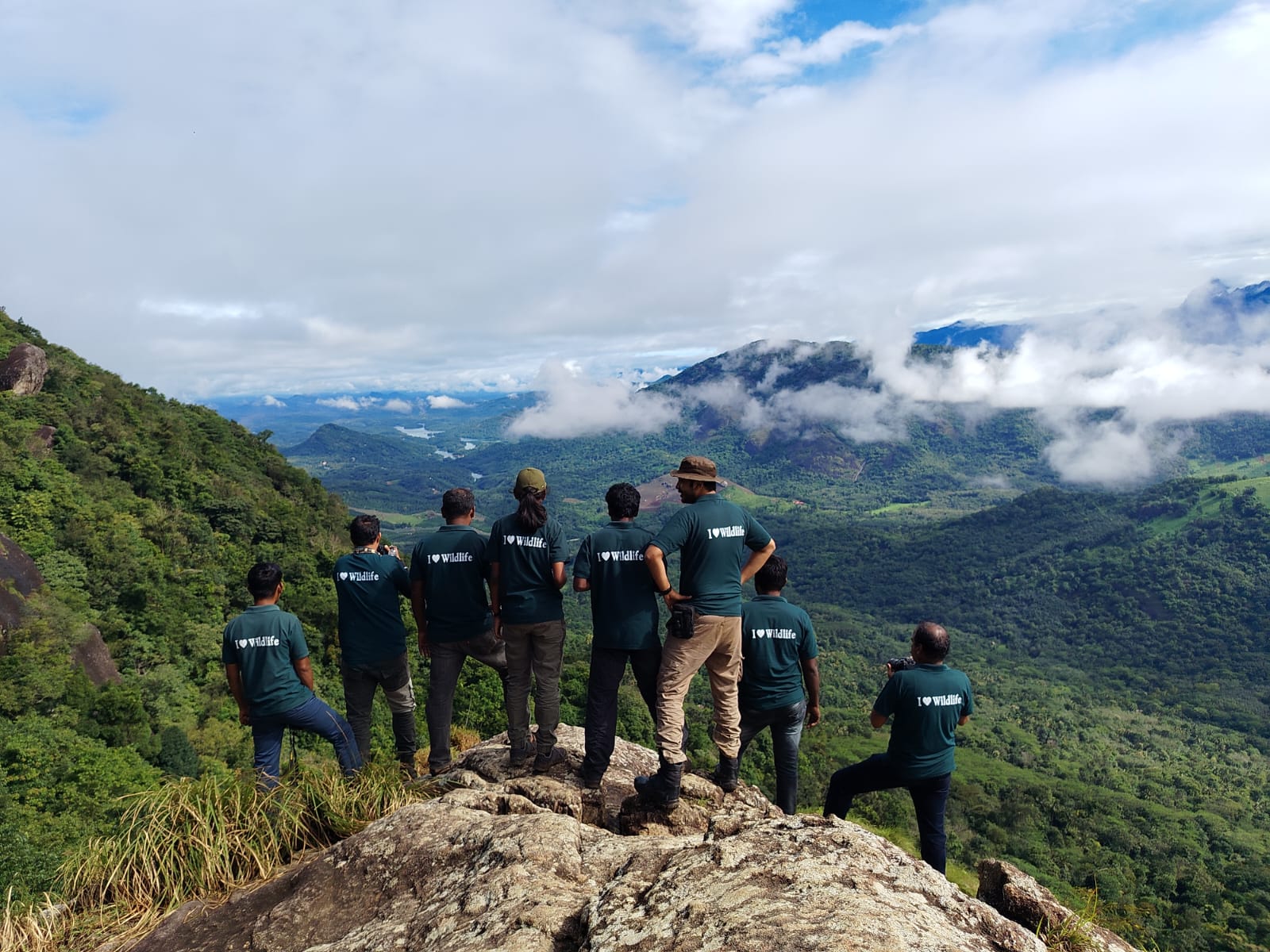
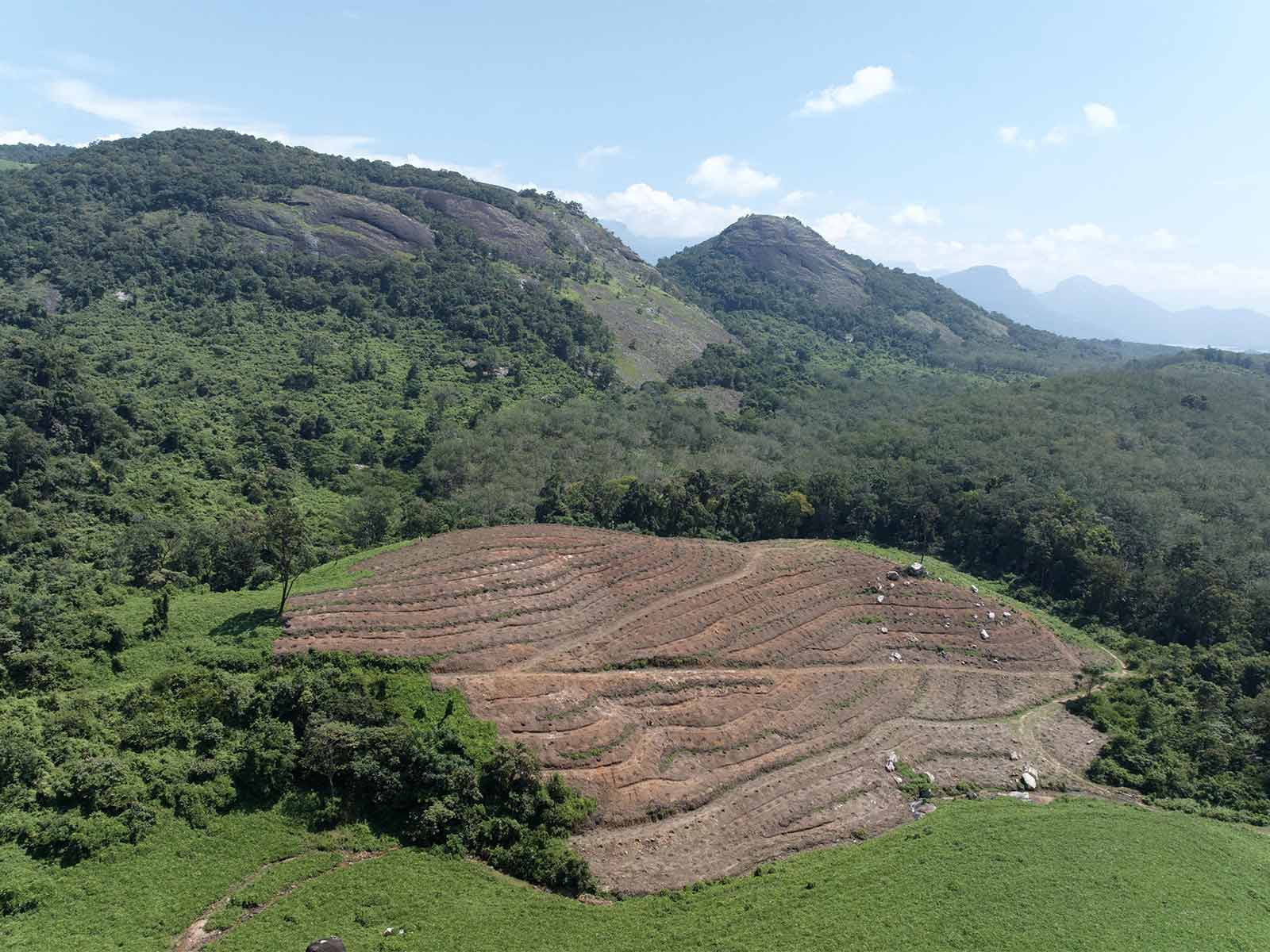
We are undertaking a community-based restoration of a critical elephant corridor by removing invasive plant species Mucuna bracteata in Kanniyakumari Wildlife Sanctuary. The KKWLS (Kanniyakumari Wildlife Sanctuary) faces a significant threat from an invasive plant, namely Mucuna bracteata, a fast-growing creeper that displaces native biodiversity by covering large areas. Mucuna was initially introduced as ground cover within rubber plantations by Arasu Rubber Corporation, a Tamil Nadu government enterprise.

Under the shade of the rubber tree canopy, the plant’s growth remained restrained and did not spread uncontrollably. However, as the rubber trees reached the end of their life cycle, they were cut down and removed, allowing ample sunlight to reach the area. This led to rapid, unchecked growth of the creeper, which soon overtook the entire region.

Its coverage is so dense that even grass struggles to grow through it, forming a thick carpet in some areas that can be several feet deep. The plant known as Kota Chikli, Thotta Payaru, or East Himalayan Mucuna is inedible to herbivores, leaving large mammals like the Indian elephant and Indian gaur, which frequently traverse this region, without a food source. Mucuna is resistant to fire and drought and has prolific seeding. It is also capable of re-establishing itself rapidly by sprouting from buried nodes. Without consistent follow-up, it quickly reclaims any cleared land, spreading over and ultimately smothering the entire plantation area.

We engaged local tribal communities to manually remove Mucuna from a sample plot located within an elephant corridor. Alongside invasive species removal, we planted native species and retained naturally regenerating vegetation.


Continuous efforts over a year resulted in a visible reduction in Mucuna spread and improved growth of native trees, demonstrating the potential for community-led restoration in critical wildlife habitats.