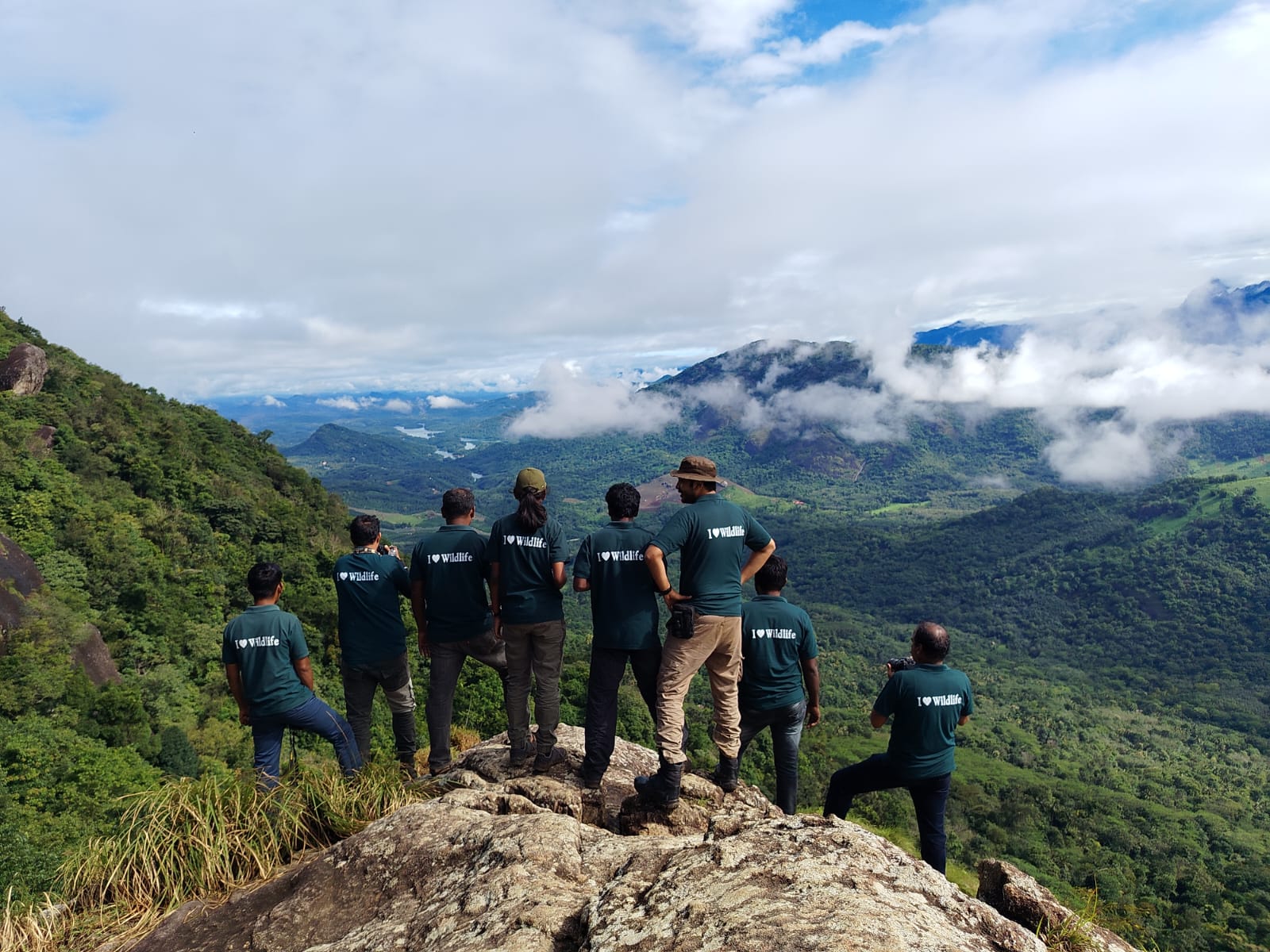
Situated at the southern tip of the Western Ghats, Kanniyakumari district enjoys a natural advantage that most districts can only dream of. Forests cover nearly 60% of the district’s geographical area according to recent forest cover assessments, making it second only to the Nilgiris in terms of forest cover percentage.
Older homes across the district reflect this natural abundance. Traditional compounds commonly contain mango, jackfruit, coconut, tamarind, sapota and numerous other tree species. A person walking through many villages in Kanniyakumari can still experience a landscape where houses and trees coexist naturally.
Yet the same cannot be said about Nagercoil city.

For a district blessed with high rainfall, fertile soils and a climate capable of supporting rapid tree growth, Nagercoil remains surprisingly barren along many of its roads. The city’s population has grown to more than 6.2 lakh people within an area of just over 61 square kilometres, making urban greenery more important than ever.
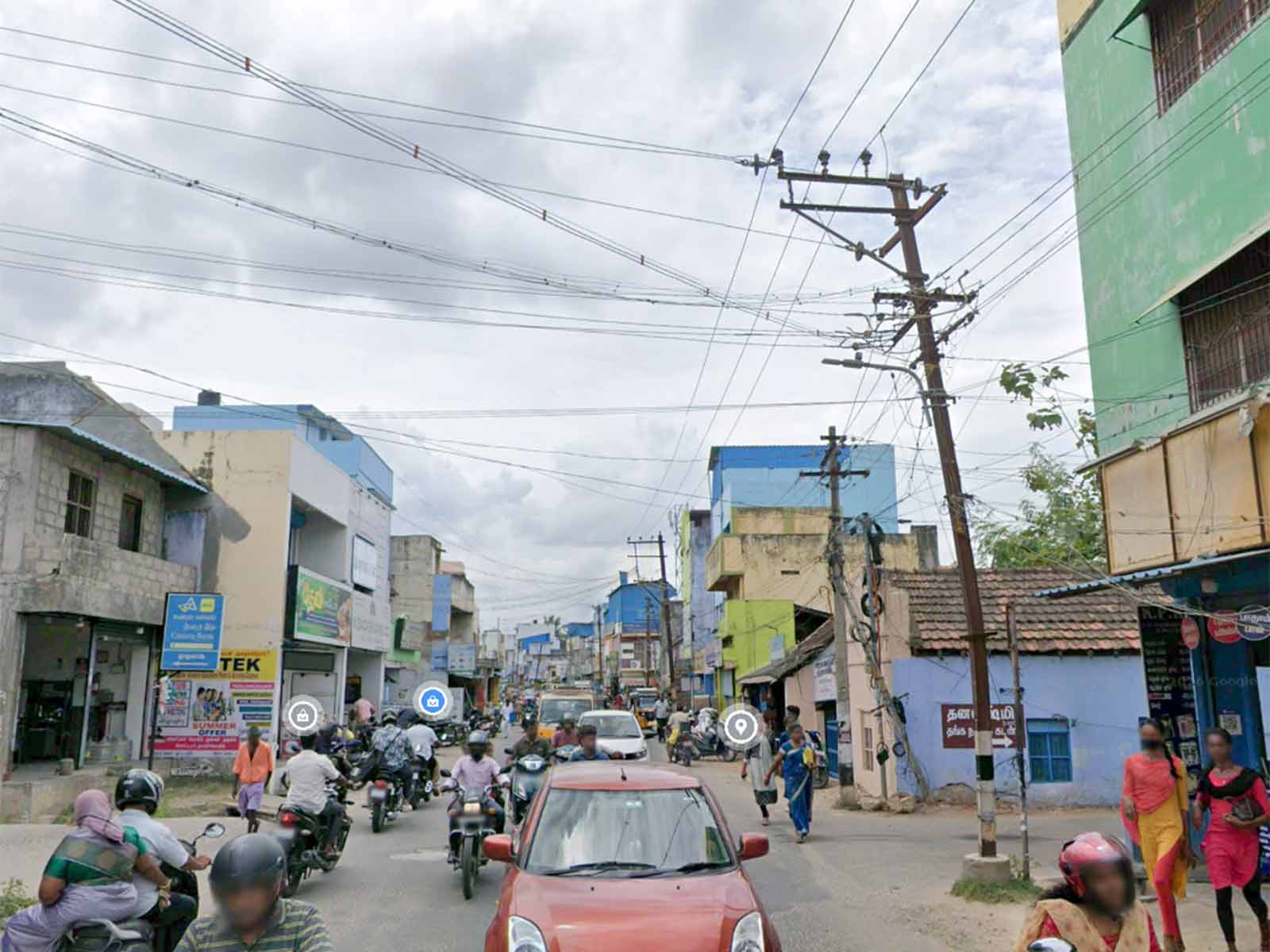
Anyone attempting to walk through Kottar, Vadasery, KP Road or many of the city’s commercial corridors during the afternoon quickly realizes the problem. Shade is scarce. Pavements and roads absorb and radiate heat. Concrete dominates the landscape. Trees that once existed along several roads have disappeared over time, often sacrificed for road widening, commercial visibility or infrastructure projects.

The question is obvious.
Why are we unable to create tree-lined avenues in one of the naturally greenest districts of Tamil Nadu?
The answer lies partly above our heads.
The Invisible Barrier to Urban Greening
Every year government departments undertake tree planting programmes. The Forest Department alone has annual planting targets running into tens of thousands of saplings. There are even schemes where saplings are supplied and planted free of cost.
However, finding locations where trees are actually allowed to grow has become increasingly difficult.
Private landowners are often reluctant because of maintenance concerns. Commercial establishments fear blocked signage. Available public land is limited.

But the greatest obstacle is the web of overhead electricity and communication lines that crisscross every road, lane and junction.
In most urban areas of Tamil Nadu, trees and overhead power lines are locked in permanent conflict.
When a sapling grows, it eventually reaches the power lines. Once it reaches the power lines, repeated pruning begins. Branches are cut. Crowns are reduced. Growth is restricted. The tree is transformed from a naturally spreading canopy into a stunted and often unhealthy structure.
For electricity maintenance teams, this is understandable. Trees touching live wires create safety hazards, outages and fire risks. Regular trimming becomes unavoidable.
The result is a silent consensus: Let us not plant large trees near power lines.

And since power lines exist along nearly every road, urban tree planting gradually disappears altogether.
Why Nagercoil Should Be One of India’s Greenest Cities
The irony is that Nagercoil possesses nearly ideal conditions for urban forestry.
The city receives approximately 975–1000 mm of rainfall annually and experiences warm temperatures throughout the year.
In many districts of Tamil Nadu, avenue trees require years of watering and maintenance before they establish themselves.
In Nagercoil, many species can survive and grow rapidly with minimal intervention once established. Species such as Singapore cherry, rain tree, poovarasu, pungam, native figs and several fruit-bearing trees thrive naturally in the local climate.

If urban planning had prioritized trees over concrete during the past few decades, much of the city could today resemble a continuous urban forest canopy.
Remember , if we can find a space for a transmission pole then we can surely find a place for a tree !
Instead, many roads remain exposed to direct sunlight throughout the day.
The Myth That Trees Are the Problem
One frequently cited reason for avoiding urban trees is the fear that they may fall during cyclones. This argument ignores a basic ecological reality.
Single isolated trees are more vulnerable to wind damage. Networks of trees, on the other hand, reduce wind velocity, protect one another and create more stable urban microclimates. Cities around the world that face hurricanes, typhoons and storms continue to invest heavily in urban tree cover because the benefits far outweigh the risks.
The solution is not fewer trees. The solution is better planning.
Underground Power Lines: An Urban Climate Solution
If Nagercoil genuinely wants greener streets, cooler neighbourhoods and a better quality of life, underground power distribution must become a long-term urban infrastructure priority.
Underground cabling offers several benefits:
1. Space for Avenue Trees
Without overhead wires, large canopy trees can be planted continuously along roads, lake bunds, parks and public spaces without future conflicts.
2. Cooler Streets
Trees can reduce surface temperatures dramatically through shading and evapotranspiration. A shaded road is often several degrees cooler than an exposed concrete road.
3. Lower Energy Consumption
As urban temperatures decrease, dependence on air conditioning reduces. This directly lowers electricity consumption and household expenditure.
4. Improved Storm Resilience
Underground power lines are less vulnerable to wind damage, falling branches and cyclonic weather.
5. Better Business Environment
People walk more when streets are shaded. Shops receive more foot traffic. Commercial districts become more attractive and comfortable.
6. Longer Lasting Roads
Tree canopies reduce direct exposure of road surfaces to intense sunlight and heavy rainfall, slowing deterioration.
7. Better Air Quality and Biodiversity
Urban trees trap dust, absorb pollutants and create habitat for birds, butterflies and other wildlife.
Imagine a Different Nagercoil
Imagine walking from Kottar to Vadasery beneath continuous shade.
Imagine KP Road lined with flowering native trees.


Imagine every major road connected by green corridors supporting birds, butterflies and small urban wildlife.
Imagine children being able to walk to school without being exposed to relentless heat.
This vision is not unrealistic.
In fact, it is easier to achieve in Kanniyakumari than in most other districts of Tamil Nadu because nature has already provided the rainfall, soil fertility and climate necessary for rapid tree growth.
The missing ingredient is infrastructure planning.
A Choice for the Future
For decades we have accepted a city where every street is dominated by poles, wires and concrete. We continue to spend money managing conflicts between trees and power lines instead of eliminating the conflict itself.
The debate is not simply about electricity infrastructure.
It is about the kind of city we want to build.
A city that invests in underground utilities and urban forests is investing in public health, climate resilience, economic vitality and quality of life.
Kanniyakumari district remains one of Tamil Nadu’s greatest natural gifts. Nagercoil should be a model green city that embraces that gift—not a concrete landscape struggling against it.
The technology exists. The benefits are obvious. The need becomes more urgent with every hotter summer.
The question is whether we have the vision to move the wires underground and let the trees grow above them.